
You are currently browsing the tag archive for the ‘United States’ tag.
Leonard Bernstein in Context. Edited by Elizabeth A. Wells. Cambridge: Cambridge University Press. 2024.
Reviewed by Zane Larson
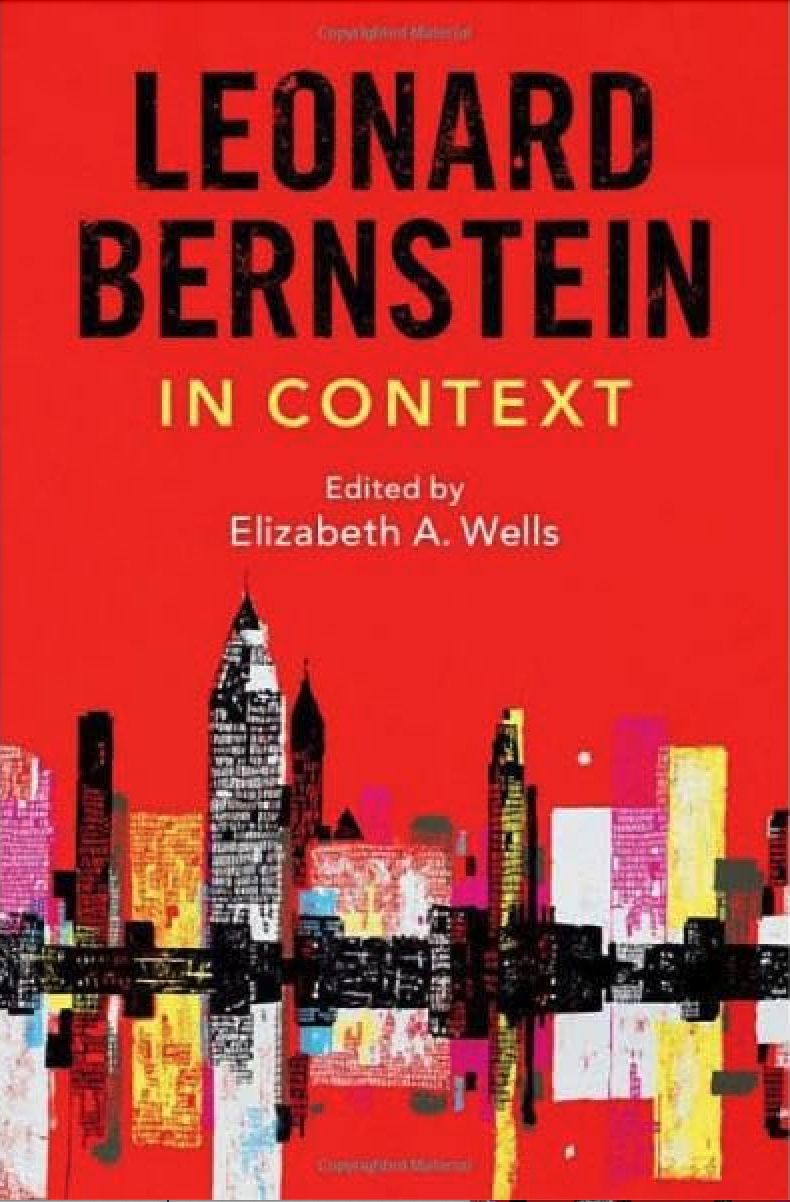
Leonard Bernstein in Context, edited by Elizabeth A. Wells, is a new publication in the “Composers in Context” series from Cambridge University Press. It joins the company of texts covering canonical figures in the Western tradition such as Mozart, Mahler, and The Beatles. Thirty-six scholars examine wide-ranging topics in the cultural and political histories of Bernstein’s life and work, such as his Jewish upbringing, his involvement in civil rights, West Side Story, and his famed Young People’s Concerts. The collection provides readers with short and concise chapters attuned to the multi-faceted scholarly conversations surrounding Bernstein’s fame, well-documented life as a pianist, conductor, composer, educator, and cultural ambassador, and his ubiquity in musicological research.
Read the rest of this entry »To Broadway, To Life! The Musical Theater of Bock and Harnick. Philip Lambert. New York: Oxford University Press, 2011. ISBN 978-0-1953-9007-0
Jews on Broadway: An Historical Survey of Performers, Playwrights, Composers, Lyricists and Producers. Stewart F. Lane. Jefferson, NC: McFarland, 2011. ISBN 978-0-7864-5917-9
Reviewed by Alisa Solomon
Like those Broadway musicals that are driven by deep emotion and a social conscience, intellectual books about Broadway musicals face a dilemma: how to be serious and popular. Indeed, books may have a harder time. From Showboat to Rent, musicals have managed to challenge audiences with questions about such issues as racism and AIDS even as they have filled the coffers of investors. But to whom is a book on Broadway addressed—to academic specialists or to die-hard show fans? Not that these categories are mutually exclusive (the best scholarship is typically driven by passion, after all), but they can represent vastly different cultures and interests. As publishers increasingly look for “crossover” projects—and as the academic study of musical theater expands—the clashing expectations of these disparate audiences can put some authors in a bind. Read the rest of this entry »
(To maintain standards of academic integrity, the regular editor of Musica Judaica Online Reviews has removed himself from the review process for this book. Mark Kligman, co-editor of the Musica Judaica journal, has graciously stepped in as guest editor. -Ed.)
The Making of a Reform Jewish Cantor: Musical Authority, Cultural Investment. Judah M. Cohen. Bloomington: Indiana University Press, 2009. 272 pp. + CD. ISBN 978-0-2533-5365-8
Reviewed by Scott M. Sokol
In the midst of a promising career as a scientist and academic neuropsychologist, I made the unusual decision to go back to school (at the Jewish Theological Seminary) to study for the cantorate. My department chair at the time made the off-handed comment in an interview that it was like watching your child go off to the circus (this from a knowledgeable Jew who often served as a lay “cantor” in his synagogue). Why did I need to go to cantorial school? After all, many years of Jewish education and especially Jewish camping had left me with a very good working knowledge of cantillation and nusach ha-t’fillah; I was a classically trained musician and had a good voice. What more did I need? My response to that common set of questions has remained the same to this day—namely, that I wanted to be an authentic cantor, an authority on synagogue liturgy and music, and I felt the only way to truly achieve that goal was through seminary study, and eventual investiture by a religious body.

 Musica Judaica Online Reviews